Spring Flowers Bring Natural Variety
Spring wedding flowers offer a distinctive mix of rounded, ruffled, and airy shapes. Tulips bring clean lines, ranunculus add layered petals, and anemones create a crisp contrast with their dark centers. Sweet peas lend a delicate, loose feel, while peonies can make a bouquet feel full and romantic when they are in season.
Availability changes with the weather, growing region, and wedding date. Ask your florist which varieties are locally available for your specific week, and stay open to a close substitute with a similar shape or color. That flexibility can preserve the look of your bouquet without relying on a flower that is difficult to source at that time.
Choose Flowers for Color, Shape, and Setting
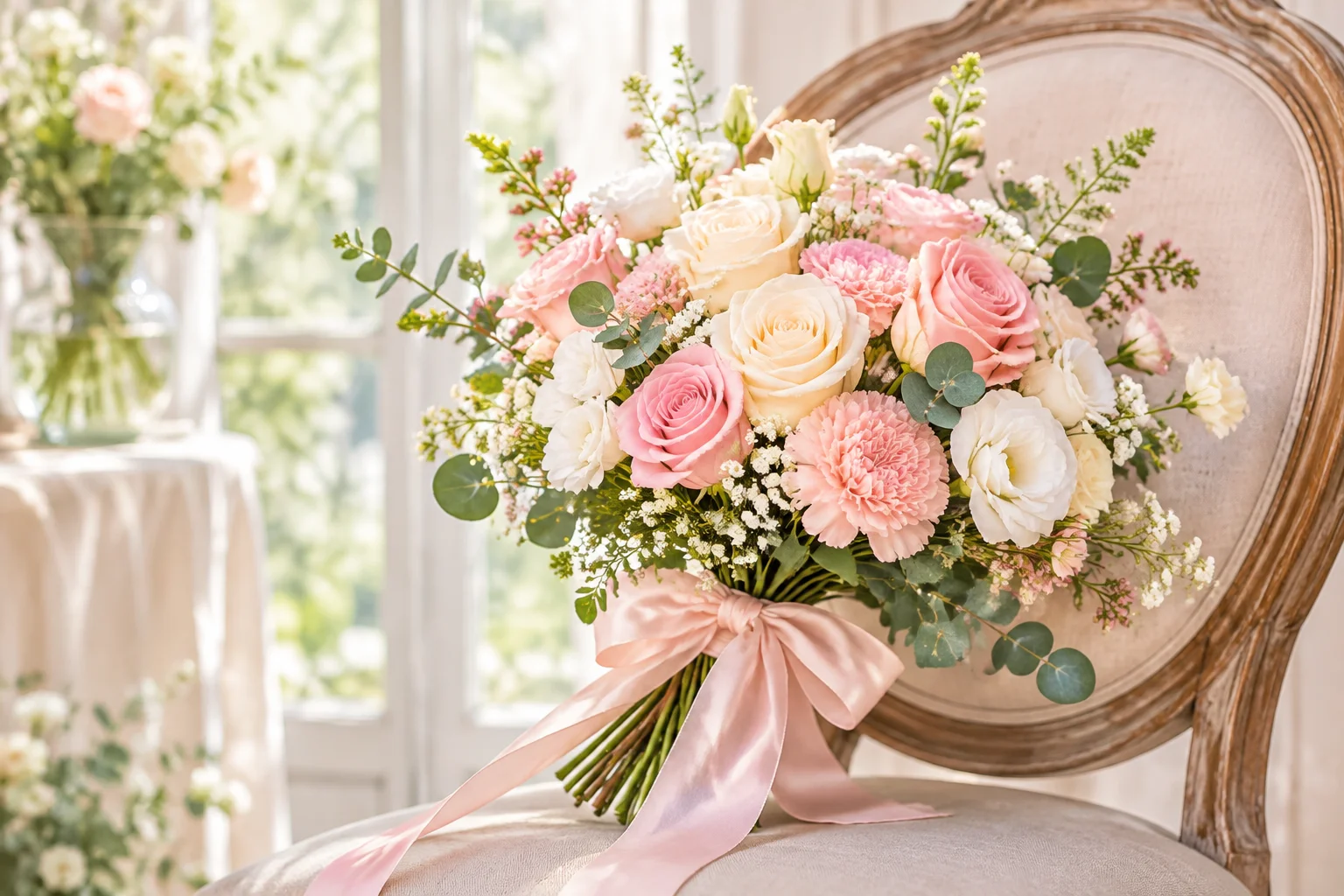
Start with the wedding palette and venue, then choose blooms that suit both. Soft pink ranunculus and cream tulips complement a gentle pastel scheme; anemones add definition to pale arrangements; sweet peas bring movement to a relaxed garden style. Use greenery to connect the flowers and keep the overall design cohesive.
Before choosing a centerpiece or bouquet recipe, consider the scale of the space, the shape of the dress, and how the flowers will be carried or displayed. Bring fabric swatches or clear palette references to your florist. Ask to review proposed substitutions and the expected bloom stage, since tightly closed buds and fully open flowers create different silhouettes.
Check Timing and Flower Care
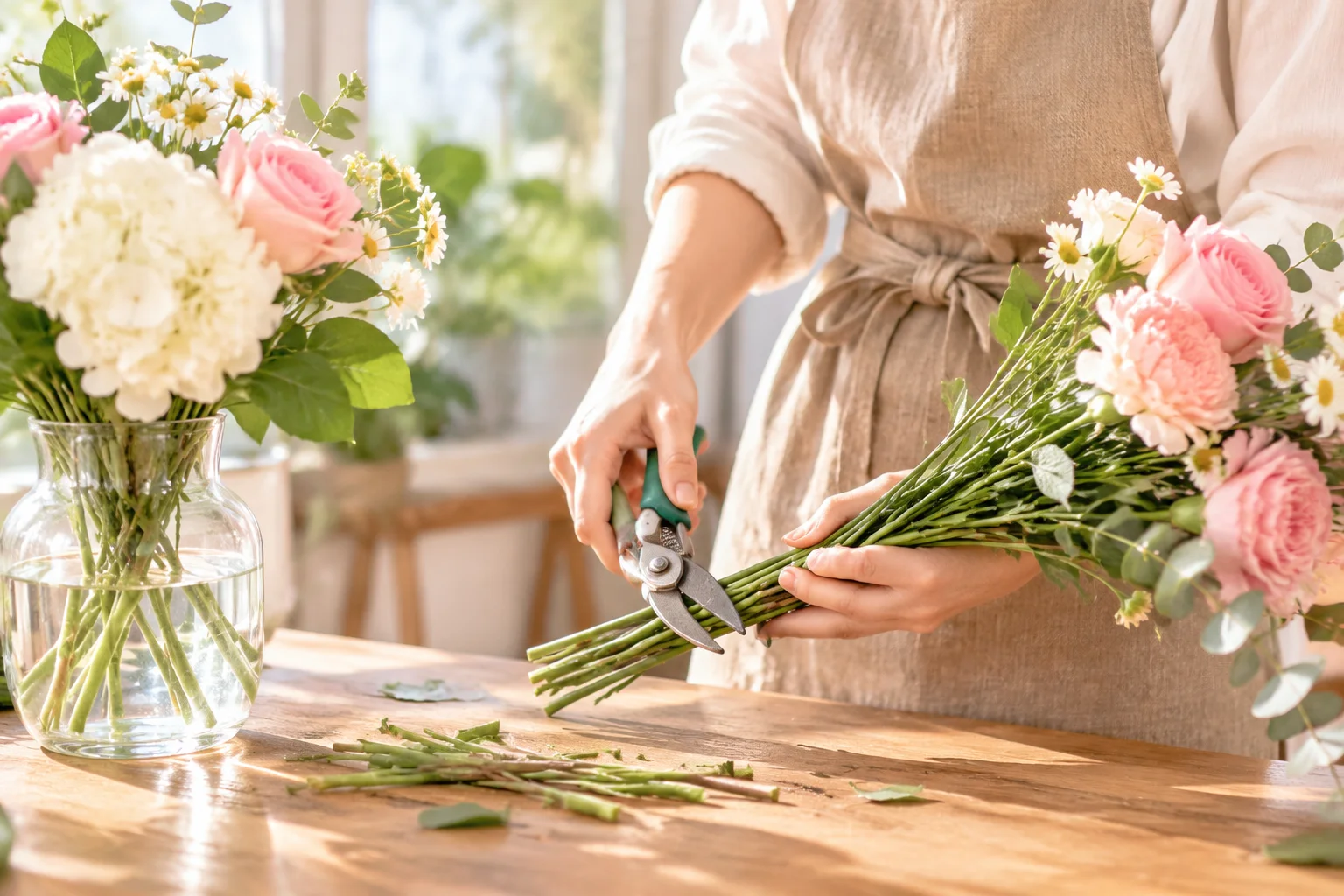
Confirm seasonal availability early, especially for a particular variety or shade. Ask how the flowers will be conditioned and stored before the ceremony, and keep bouquets away from direct sun, heaters, and strong drafts. Delicate stems such as sweet peas benefit from careful handling, while larger blooms need secure support so their heads sit comfortably in the arrangement.
Plan Around the Wedding Date
Early spring often brings tulips and anemones into the conversation, while ranunculus and sweet peas may be available across a broader part of the season, depending on the grower and location. Peonies are more date-sensitive, so ask your florist about their likely local window before making them the centerpiece of the design.
When a favorite bloom is unavailable, choose a replacement by its role rather than its name: match the petal texture, size, or color impression. A florist can suggest a seasonal alternative that keeps the bouquet balanced. Confirm the final flower list, delivery timing, and care instructions together so each arrangement arrives ready for the day.